
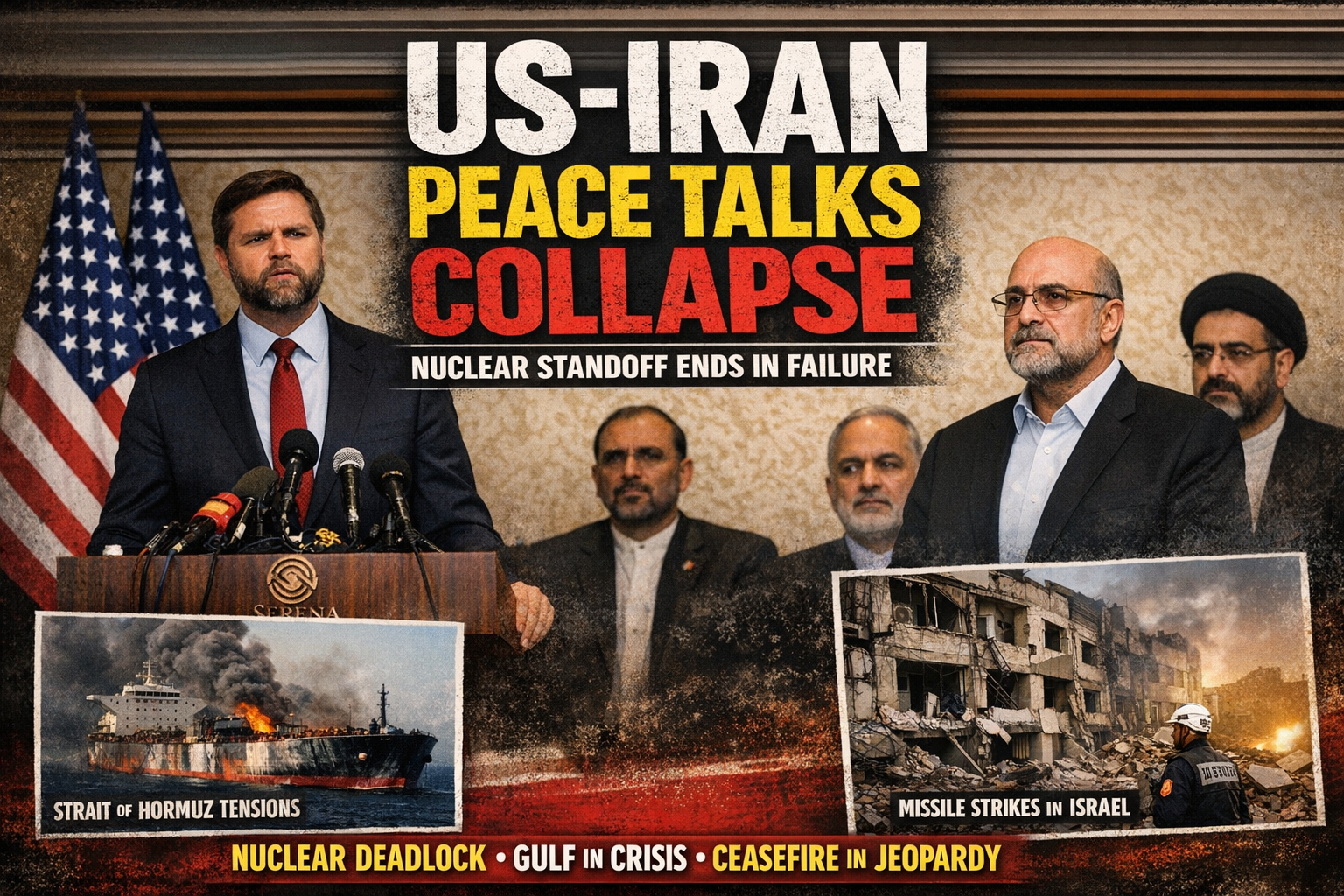
US–Iran Peace Talks 2026 Collapse After Marathon Negotiations in Pakistan

Diplomatic efforts to halt the escalating conflict between the United States and Iran have ended without a breakthrough, following nearly a full day of high-level negotiations in Islamabad, Pakistan. The outcome leaves the fragile ceasefire in doubt and heightens concerns that hostilities in the Middle East could soon resume.
No Agreement After Intensive Talks
U.S. Vice President JD Vance confirmed that despite extended discussions lasting over 20 hours, both sides failed to reach a consensus. According to him, the central issue remains Iran’s unwillingness to fully abandon its nuclear ambitions.
Washington had pushed for a clear and binding commitment from Tehran to halt any development related to nuclear weapons. However, Iranian negotiators reportedly resisted these demands, insisting on maintaining their nuclear program under what they describe as sovereign rights.
Key Points of Disagreement
The failed negotiations highlight several deep divisions between the two sides:
Nuclear Program: The U.S. wants strict limitations; Iran refuses to concede fully
Strait of Hormuz: Iran seeks greater control over the strategic waterway
Sanctions & Reparations: Tehran is demanding compensation for war damages and relief from sanctions
Missile Capabilities: Iran is unwilling to scale back its ballistic missile program
These sticking points have made compromise difficult, even as both sides publicly claim to prefer diplomacy over continued conflict.
Ceasefire Hanging by a Thread
The talks were meant to reinforce a temporary ceasefire that had paused six weeks of fighting. However, with no agreement reached, uncertainty now surrounds whether that truce will hold.
Iranian officials issued strong statements shortly after the talks, signaling distrust toward the U.S. and its allies while emphasizing their intention to defend national interests. Analysts warn that without a last-minute shift in positions, the ceasefire could collapse entirely.
Broader Implications
The failure of these negotiations has wider consequences beyond the immediate conflict:
Global Oil Supply: Tensions around the Strait of Hormuz could disrupt energy markets
Regional Stability: Neighboring countries remain on edge as violence could spill over
Future Diplomacy: This marks one of the most significant failed engagements between both nations in over a decade
The situation now hinges on whether either side is willing to revisit negotiations—or prepare for escalation.